The Cashmaster Guide to Bill Counters: Standard vs. Mixed Value Explained

Choosing the right bill counter can make a significant difference to your cash-handling efficiency. With so many models on the market, businesses are often left wondering whether a standard bill counter or a bill counting machine for mixed bills best suits their needs.
In this guide, Cashmaster breaks down the difference between standard and mixed value bill counters, explains what to look for in a bill counter machine, and shows how the right automated cash handling machine can help you optimize your cash processes, cut down on errors, and reduce your exposure to fraud.
Standard Bill Counters: The Basics
.png?width=299&height=299&name=ProNote%20and%20Printer%20Five%20(3).png)
A standard bill counter is designed to count a single denomination at a time. Notes must be sorted before they're fed into the machine, which then counts each stack and confirms the total quantity of bills.
This approach works well for businesses with straightforward, high-volume cash flows, such as a single-denomination cash drawer at checkout or a bank's cash-processing department, where large batches of one denomination are counted at a time. However, standard counters can fall short when cash comes in mixed, unsorted batches, as is often the case at the end of a busy retail or hospitality shift.
What Is a Cash Counting Machine for Mixed Bills?
A cash counting machine for mixed bills counts and totals notes of different denominations in a single pass. Instead of requiring staff to sort cash by value before counting, these machines identify each denomination automatically and calculate the total value of the batch.
For businesses handling cash from multiple sources, such as registers, vending machines, or drop safes, a bill counter can save significant time by removing much of the manual sorting work. Cashmaster's ProNote range counts mixed bills by identifying each note's denomination as it passes through the machine, then automatically totaling the count across denominations, rather than requiring staff to sort and run each denomination separately.
- Faster reconciliation: Notes from multiple registers or sources can be fed into the machine together, without staff first sorting them by denomination.
- Reduced staff time: Employees spend less time preparing cash for counting, freeing them up for customer-facing tasks.
- Fewer errors: Automating the sorting and totaling process removes a key source of human error.
What to Look for in a Bill Counter Machine
Not all bill counters are created equal. When comparing devices, businesses should consider the following: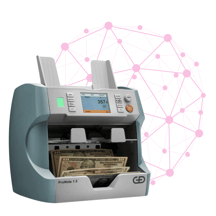
- Mixed denomination capability: Can the machine count and total mixed bills, or only sorted, single-denomination batches?
- Counterfeit detection: Does the machine flag suspect notes, or will you need a separate verification device?
- Speed and capacity: How many notes or how much cash can the machine process per minute, and does this match your transaction volume?
- Ease of use: A simple interface reduces training time and the risk of operator error.
Durability and support: Look for a manufacturer with a track record of reliable hardware and responsive customer support.
Weighing up these factors against your business's cash volume and cash sources will help you identify the right automated cash handling machine for your operation, rather than paying for capabilities you don't need or under-investing in a machine that can't keep pace with demand.
Cashmaster supplies the Giesecke+Devrient ProNote® 1.5 and ProNote® 330, both high-speed bill counters that can help businesses manage the demands of cash counting.
Why Choose an Automated Cash Handling Machine?
Manual cash handling is time-consuming and leaves plenty of room for error. An automated cash handling machine addresses both issues, allowing businesses to count, verify, and reconcile cash faster and more accurately than manual methods allow.
Beyond speed, automation also strengthens security. Consistent, machine-led counting reduces opportunities for discrepancies to go unnoticed, helping protect revenue and giving finance teams greater confidence in their cash reporting.
Optimize Your Cash Handling Processes with Cashmaster
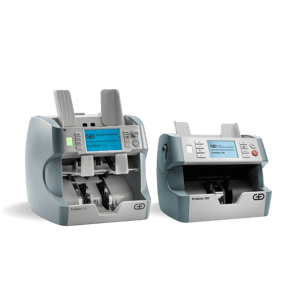
Whether you need a machine to count mixed bills quickly or want to strengthen your fraud defenses, Cashmaster's range has a solution. The Giesecke+Devrient ProNote® 1.5 and ProNote® 330, supplied by Cashmaster, are designed to streamline cash handling processes, boost efficiency, and reduce shrinkage.
To find the right automated cash handling machine for your business, contact us and get in touch with our cash management consultants.